| Product / Item | Unit | Price |
|---|---|---|
| Chakki Atta Price in Pakistan | as quoted | Not available |
| Chakki Flour Atta 1 kg packet | 1 kg | Rs. 135 |
How chakki atta is priced
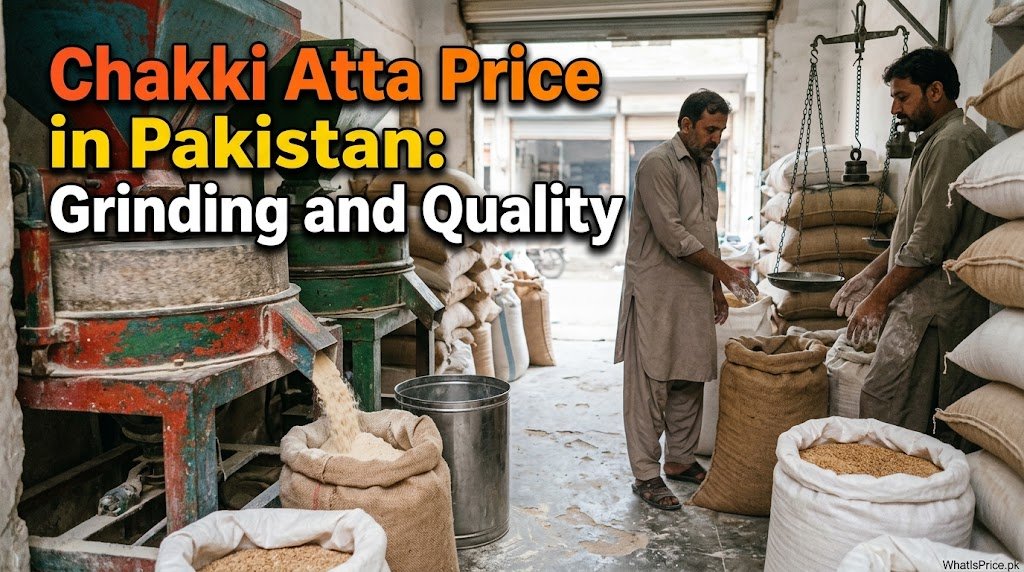
Chakki atta may be sold as ready-ground flour by the kilogram or in sealed packs. Some local mills also grind wheat that the customer brings, charging separately for the milling service. These are different transactions: the price of finished flour includes the wheat and processing, while a grinding fee normally does not include the cost of the wheat itself.
When checking the prices above, identify whether a line refers to flour per kilogram, a fixed-weight packet or grinding service. Without that distinction, a cheap-looking rate may be impossible to compare fairly with a supermarket bag of atta.
What does chakki actually describe?
Chakki traditionally refers to grain grinding using millstones. Pakistan’s wheat flour standards recognise that atta can be produced through different milling methods, including small stone mills and larger mechanical operations. The label alone does not establish the flour’s exact nutrient content, fortification or safety. Those claims depend on the product and its documentation.
Different mills may produce a finer or coarser grind. Some customers prefer the texture of one grind for particular rotis. What matters for comparing purchases is the actual flour offered, not a general claim that one mill is healthier than every alternative.
Ready-ground flour versus grinding your own wheat
| Option | What the payment covers | What to check |
|---|---|---|
| Packaged chakki atta | Finished flour and packaging | Net weight, flour type and packing date |
| Loose flour from local chakki | Finished flour by weight | Hygiene, weighing and batch freshness |
| Own wheat ground at a mill | Grinding service only, if quoted that way | Fee basis, wheat quantity and return weight |
How to work out the real per-kilogram cost
Suppose a household buys 10kg of wheat and pays a separate fee to grind it. Add the wheat purchase price to the grinding fee and any transport charge. Divide that total by the kilograms of usable atta actually collected. Milling can change the weight of the finished product depending on processing and handling, so do not automatically assume the returned flour weighs exactly the same as the grain supplied.
For a ready-packed bag, the calculation is simpler: total pack price divided by labelled net weight. When comparing two products, use the same unit, preferably rupees per kilogram, and keep delivery costs visible rather than blending them into a misleading product price.
Freshness, moisture and practical storage
Ask the mill when the batch was ground and whether the flour is stored in clean, dry containers. Flour should not smell musty, show insects or contain obvious foreign material. Keep purchases away from heat and moisture, transfer open flour into a clean container, and follow any label instructions for storage duration.
Do not assume that freshly ground flour is automatically free of contamination. Grinding equipment, storage bins, the original grain and handling conditions all matter. A clean, reputable supplier and a traceable product are useful selection criteria.
Compare with other atta types
A standard mill-produced bag and chakki atta can differ in grind and composition. If a recipe or household preference calls for a particular flour, compare that type specifically. The general atta price page helps with the wider market context, while PBS price statistics explain general wheat-flour price monitoring rather than promising one rate for every local chakki.
Questions to ask a chakki operator
Ask whether the rate is for finished atta or only milling, whether your wheat is ground separately or in a mixed batch, the approximate collection timing, and how the flour is packed for transport. These practical answers will often tell you more than a one-line price advertisement.