| Product / Item | Brand | Variant / Model | Unit | Price |
|---|---|---|---|---|
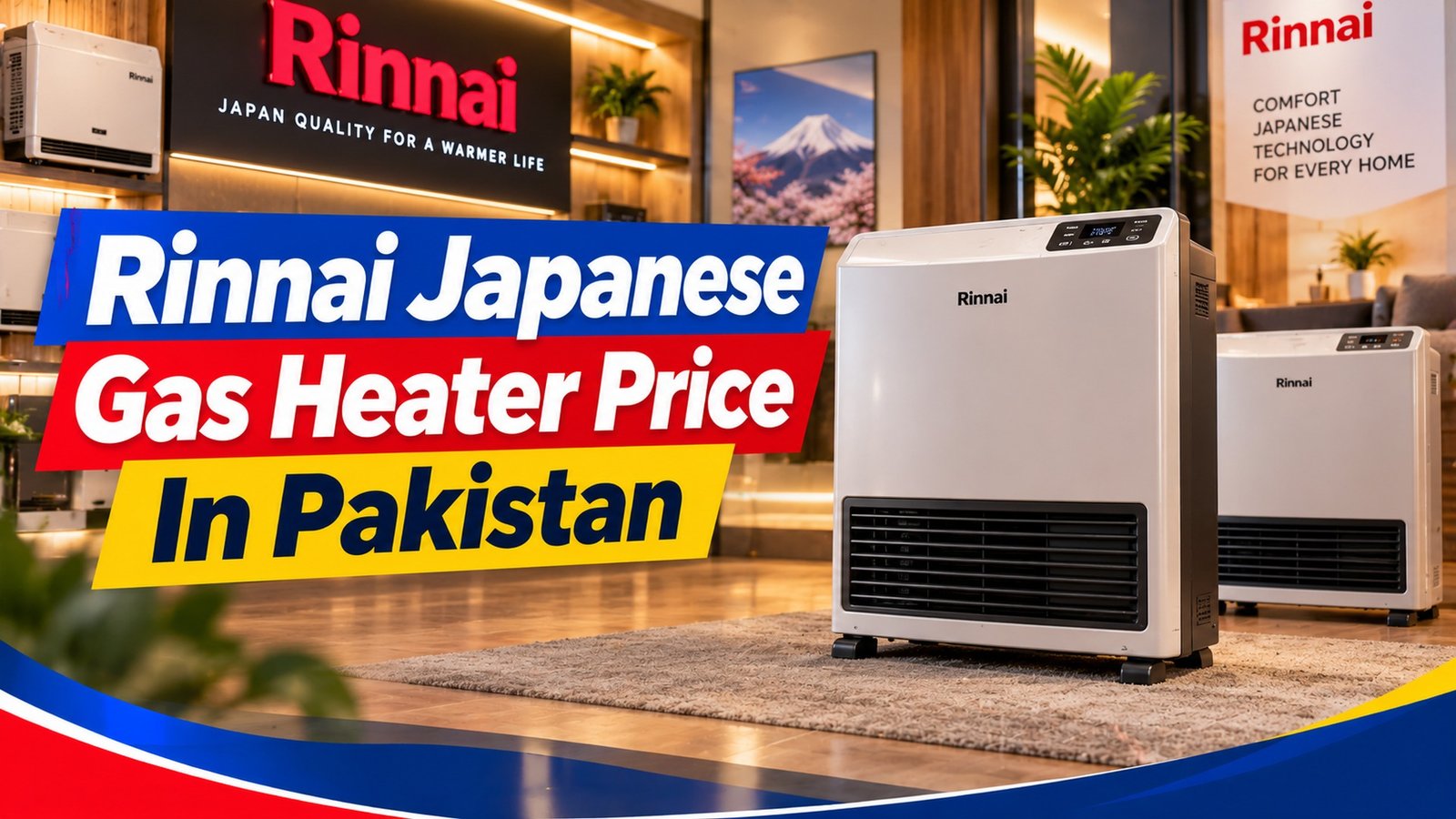
| Rinnai Gas Heater RHS1260 | Rinnai | RHS1260 | unit | Rs. 98,900 |
The Rinnai Japanese gas heater price in Pakistan depends on far more than the heater’s appearance or an advertised model name. Rinnai makes gas fan heaters and publishes official precautions covering fuel compatibility, ventilation, proper gas connection and equipment condition. For a heater imported from Japan, the first task is to identify its precise gas category and original specification, then establish whether it can be safely used with the gas supplied at the intended Pakistani address. A used heater with the wrong fuel rating, missing connector or poor combustion condition is not a bargain at any price. No nationwide current price for the exact products covered by ambiguous local advertisements has been independently verified here.
Why imported Japanese Rinnai heaters require extra checking
Rinnai is a real Japanese manufacturer with published product-safety guidance. The difficulty facing a Pakistani shopper is that the word “Japanese” can describe origin, a second-hand import route or merely a marketing style. A genuine Rinnai name does not, by itself, establish gas compatibility. The exact model and fuel label must be matched to the supply the appliance is designed to use.
Japanese gas appliances may have model variants intended for city gas grades identified as 12A or 13A and variants made for LPG. Rinnai’s own guidance distinguishes these fuel types and warns against using an appliance on the wrong gas. Never assume that any Japanese city-gas heater is interchangeable with the gas available from a Pakistani pipeline or cylinder. The gas designation, pressure requirements and connection method need competent confirmation before installation.
Imported appliances may also have an electrical connection for fans or controls. That raises a separate voltage-compatibility question: a gas heater is not always independent of the electricity supply. Ask for clear photographs of both the gas label and electrical label, where present. The model plate matters more than an advertisement saying “fully automatic” or “Japan original”.
What changes the price of a Rinnai gas heater
Two heaters described as Rinnai can have different prices because they are not the same age, capacity or condition. Check whether the offer is for a gas fan heater, a radiant gas heater or another appliance. The capacity rating, fuel category, physical state, included genuine connector, controls and safety devices should be compared on the same model and condition basis.
Buying a used heater may involve professional inspection, replacement filters, a proper supply hose, electrical compatibility work and possibly replacement parts. These costs belong to the ownership decision even when the initial seller quotation looks affordable. Transporting an appliance to a different city does not prove it can be connected safely to the local utility supply.
An advertised seller price is not an official national rate. It should be dated and supported by an identified model. One existing Japanese Rinnai gas heater listing on the site may refer to a particular product, but that amount should not be extrapolated to every Japanese gas fan heater or treated as a verified current price for another model. The right comparison is the exact manufacturer model against the exact physical unit.
Fuel type is a safety requirement, not a negotiable accessory
Rinnai’s support material explains that the same model family may be sold in versions intended for different fuel types. Therefore, a code or housing style may not tell the full story without the specific gas-type designation. A heater designed for LPG should not be placed on city gas, nor should a city-gas appliance be placed on LPG, merely because a connector fits or a seller suggests adjusting a knob.
Using incompatible gas can produce incorrect combustion and carbon monoxide, or result in abnormal ignition. Those risks are not visible from an attractive product photograph. A technician familiar with local requirements and the particular appliance must determine whether the supply and equipment are suitable. Do not request informal conversions or alter jets, regulators or burners yourself.
In Pakistan, a pipeline supply, a cylinder and different local service areas can involve different operating considerations. Gas pressure and composition are not safely inferred from the fact that the home has gas service. The buyer must receive a clear compatibility decision for the actual installation address, not a generic assurance from an unrelated market.
What to confirm before comparing Rinnai offers
| Item to inspect | Why it changes the decision | Acceptable evidence |
|---|---|---|
| Exact heater model | Distinguishes capacity and features | Complete plate and manufacturer reference |
| Specified fuel category | Wrong gas can cause dangerous combustion | Appliance gas label and qualified gas-supply assessment |
| Condition of burner and filter | Affects reliability and combustion | Professional inspection and maintenance record |
| Gas connection parts | Unapproved hose or connector can leak | Correct manufacturer-compatible approved components |
| Electrical supply rating, if fitted | Fan and controls may require electricity | Actual rating plate and safe supply arrangement |
| Dated seller quotation | Separates current offer from old advertisement | Written unit price, condition and return terms |
Ventilation and combustion safety
Unlike a plug-in resistance heater, a gas heater burns fuel. Under inadequate ventilation or incorrect combustion conditions, it can create dangerous carbon monoxide (CO), a gas people cannot reliably detect by smell. Rinnai advises maintaining ventilation and refreshing air while using gas fan heaters. The manufacturer’s specific operating instructions take priority over generic internet advice, especially for products intended for different countries.
Rinnai’s guidance also flags repeated ignition difficulty, abnormally high flames, gas odour, discoloured parts and blocked filters as signs that require attention. If the heater smells of gas or behaves abnormally, stop using it, avoid electrical switches or ignition sources, leave the area if a leak is suspected, and contact the local gas emergency service or an appropriately qualified professional. Do not run the heater again merely because the smell disappears.
Keep the hot-air outlet and intake clear and never place drying clothes, spray cans or flammable liquids near the heater. Rinnai expressly warns about obstructed air outlets and spray cans heated by hot airflow. Do not operate a gas heater while sleeping or leave it unattended. A modern control panel does not remove the need for ventilation, safe placement and proper inspection.
Rinnai fan heater versus an electric room heater
An electric resistance heater needs suitable electrical wiring and a wall outlet, but it does not burn gas at the point of use. A gas fan heater depends on the approved fuel connection, combustion integrity, ventilation and often an electrical supply for its fan. These are fundamentally different safety and running-cost questions. For a broader comparison, consult the heater price guide for Pakistan.
Operating-cost calculations must also use different units. Electric equipment uses kilowatt-hours; gas consumption must be calculated in units consistent with the appliance and billed supply. Rinnai publishes examples using stated gas types and conditions, but figures from a Japanese trial cannot automatically become a monthly Pakistani bill. Check actual measured consumption, local billing units and the tariff in force for that specific supply.
If compatibility cannot be established, a properly identified electric appliance may be easier to assess. The electric heater comparison guide explains the electric-side differences. Any substitute still needs safe placement, suitable wiring and supervision; switching fuels does not eliminate all hazards.
Questions to ask when viewing a used Rinnai heater
- Can the seller show the complete model plate and gas-type label?
- Was the heater inspected by someone qualified to work on gas equipment?
- Does its stated fuel category match the exact intended supply after professional assessment?
- Are the proper connector, approved hose and manufacturer instructions included?
- Are the fan, inlet filter, cabinet and controls free from obvious defects?
- What is the full dated price, including safe installation or inspection costs?
- Does the seller offer a legitimate return path if the unit cannot be approved for use?
Why older imports deserve a condition-based assessment
Age alone is not enough to diagnose a gas appliance, but unknown maintenance history increases uncertainty. Dust can clog filters; corrosion can damage burner components; hoses and fittings can deteriorate. Abnormal sound, irregular ignition or discolouration should be treated as reasons for professional attention, not bargaining points or simple do-it-yourself repair tasks.
Rinnai recommends periodic professional inspection of gas appliances. That is especially relevant where a heater has travelled through multiple owners and storage facilities. Ask whether instructions are readable and complete. If the original manual is Japanese-only, have critical safety and fuel-compatibility information interpreted accurately rather than relying on an informal translation of controls.
Questions Pakistani buyers ask
Can a Japanese Rinnai gas heater run on Pakistani natural gas?
It cannot be assumed. Rinnai manufactures gas appliances for specific fuel categories, and the supply available in Pakistan may not match a Japan-market heater. Never operate a mismatched gas appliance or attempt a home conversion. A suitably qualified local gas specialist must confirm the exact appliance, gas category, supply characteristics and connection requirements before any use.
Is LPG the same as Japanese city gas 13A?
No. LPG and Japanese city-gas designations describe different supply categories, and Rinnai warns against interchanging incompatible appliances. A label mentioning 13A is not permission to attach an LPG cylinder. Even when the device appears to ignite, a wrong fuel configuration can cause dangerous combustion. Read the actual gas-type label and seek professional approval.
What is the current price of a Rinnai heater in Pakistan?
There is no single verified national rate for the many imported models and conditions described under this term. A real quotation needs model code, fuel type, condition, date and location. Extra inspection or connector costs should be considered separately. Published values for one model must not be used as a current price for every Japanese Rinnai gas heater.
Are imported second-hand Japanese heaters safe?
A second-hand heater should be treated as an appliance needing model verification and competent inspection, not automatically as safe or unsafe solely because it is used. Look for documented fuel type, approved connection equipment and maintenance history. Corrosion, blocked filters, failed ignition and gas odour are serious warning signs. Never energise or connect a questionable appliance to “test it quickly” without professional oversight.
Can I keep a Rinnai gas fan heater on overnight?
Do not sleep with a portable gas heater operating unless the exact model’s instructions and applicable safety requirements explicitly permit the specific use; Rinnai’s general heater safety guidance advises turning off heaters when sleeping or away. Ventilation and carbon monoxide risk remain critical even if the unit has automatic controls. A CO alarm is additional protection, not a substitute for correct installation and ventilation.
How can I estimate monthly gas cost?
Use the documented model’s gas consumption in a unit matching the local tariff, multiply by expected operating time, and apply the actual Pakistan supply charges. Rinnai’s Japanese examples illustrate how consumption changes with room conditions, but they use particular gas types and test assumptions. They cannot be converted to a trustworthy Pakistani monthly figure without suitable local billing and appliance data.
What if I smell gas around the heater?
Stop operation immediately and treat a suspected leak as an emergency. Avoid flames and electrical switching, move people away from the affected area and contact the local gas emergency service from a safe location. Do not repair or reconnect gas components yourself. A qualified professional should establish the cause and approve the system before use resumes.