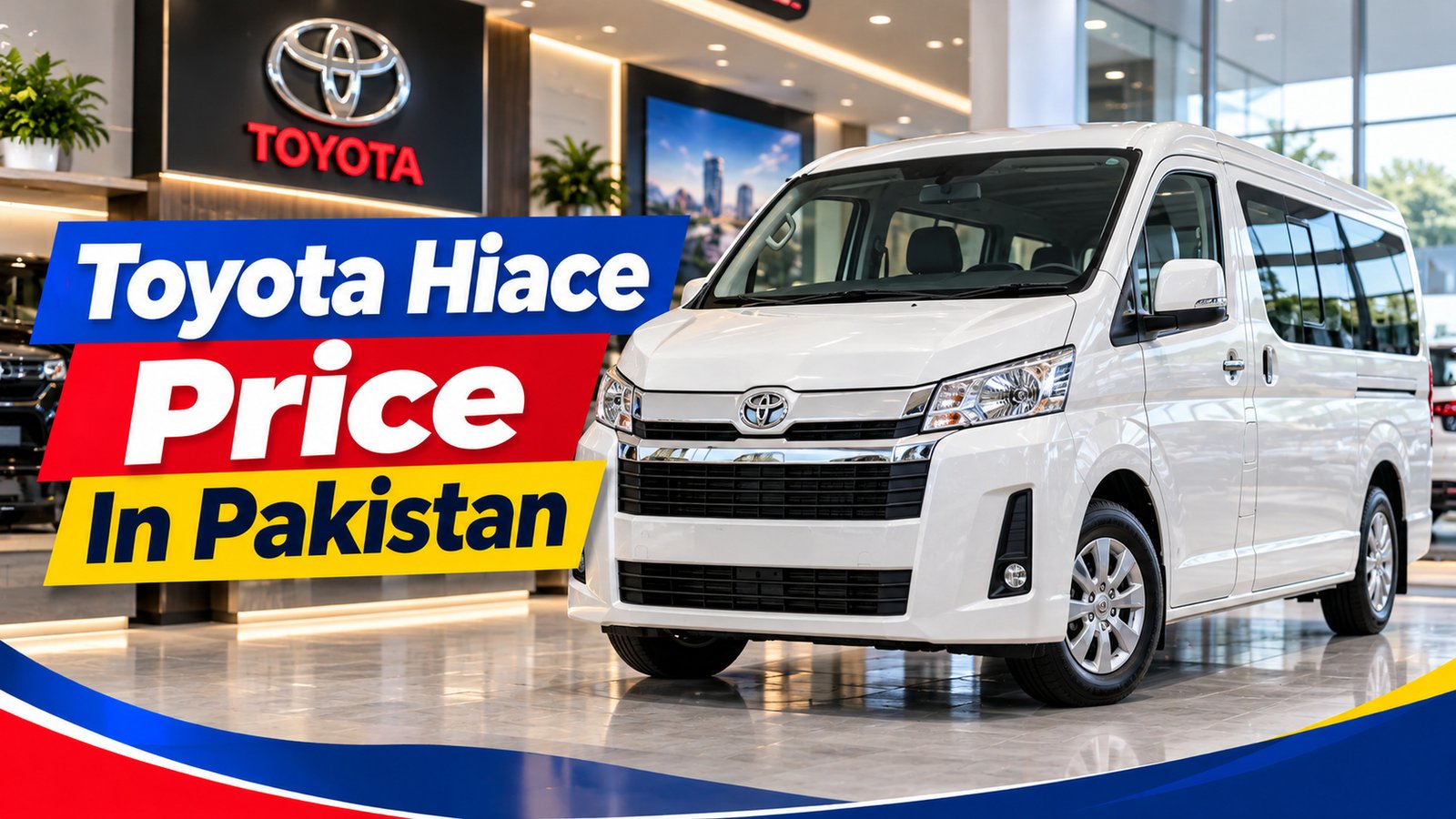
| Product / Item | Brand | Variant / Model | Seller / Market | Unit | Price |
|---|---|---|---|---|---|
| Toyota Hiace Standard Roof Diesel | Toyota | Standard Roof | PakWheels price guide | vehicle | Rs. 13,069,000 |
| Toyota Hiace High Roof Commuter | Toyota | Commuter | PakWheels price guide | vehicle | Rs. 14,959,000 |
| Toyota Hiace High Roof Tourer | Toyota | Tourer | PakWheels price guide | vehicle | Rs. 17,059,000 |
| Toyota Hiace Luxury Wagon High Grade | Toyota | Luxury Wagon High Grade | PakWheels price guide | vehicle | Rs. 21,029,000 |
Toyota Hiace prices in Pakistan depend on which Hiace is being quoted: the model family includes different body and roof forms, passenger layouts and engine generations. Toyota Indus lists the Hiace and Hiace Deluxe among its official vans, while its newer 2.8-litre Hiace documentation identifies standard-roof, high-roof, Tourer and luxury-wagon configurations. Those vehicles cannot be priced as though they were one identical van. A quotation should specify the complete model code, seating plan, transmission, fuel type, delivery basis and the equipment actually supplied. For fleet buyers, calculate the cost of legally operating the van, not just the initial purchase figure, because tyres, servicing, insurance and passenger-comfort equipment can change the economics.
Why roof height and body length matter
The meaning of Hiace changes with its body configuration. A high-roof vehicle can provide a different passenger experience and loading arrangement from a standard-roof variant, but it may create restrictions at low entrances and parking structures. Measure the intended route and garage before choosing a body. A super-long configuration also requires attention to turning room and pickup/drop-off points. For school, staff and tourist use, confirm the approved seating layout and access, not merely how many people a salesperson says could fit.
Older 2.7 petrol and newer 2.8 diesel specifications
Toyota Indus’s general Hiace page describes a 2.7-litre petrol and a 2.5-litre diesel engine in its older product material, while newer Hiace 2.8-litre specifications cover a separate vehicle generation. Mixing those figures can mislead buyers comparing used and new listings. Start with manufacture year, engine code, chassis family and exact brochure. Fuel type matters to operating costs, maintenance and duty-cycle suitability; it is not safe to assume every Pakistani Hiace has the same gearbox or power output.
Specification differences worth comparing
| Topic | Documented distinction or buyer check |
|---|---|
| Standard Hiace | Van configurations and older-generation engines may differ from new Hiace Deluxe/Tourer |
| Hiace Deluxe/Tourer | Check 2.8-litre diesel, roof and seat layout against current local brochure |
| Passenger seats | Toyota literature shows different layouts; confirm exact configuration and legal registration |
| Total cost | Vehicle, passenger fit-out if applicable, registration and business operating costs |
Read the specification distinctions above as a guide to selecting the correct vehicle, not a table of live prices. The exact version and year must be confirmed from official product literature or the physical vehicle. Where a description includes a named technology, it should only be applied to a trim whose original manufacturer documentation supports it. This distinction is especially important when Pakistani listings combine imported stock, locally supplied models and older registered examples under the same heading.
Tourer versus commercial passenger transport
A Tourer or luxury wagon is aimed at a different comfort and equipment level from a basic working passenger van. Compare seats, air-conditioning distribution, sliding-door mechanisms, head restraints, trim materials and luggage space. If the vehicle will operate commercially, evaluate how passengers actually board, how many bags can be carried and what happens when every legal seat is occupied. Comfort accessories do not substitute for seat-belt compliance, sound brakes and correct vehicle registration.
For a useful alternative perspective on vehicle size and price basis, consult Kia Carnival passenger-vehicle comparison. Apply the specifications and cost assumptions of each vehicle separately rather than assuming their listed prices refer to identical packages.
Cost per kilometre for fleet owners
A fleet purchaser should calculate annual fixed expenses and vehicle-running expenses separately. Fixed costs include financing where applicable, taxes, insurance and depreciation. Running costs include fuel, tyres, engine oil, filters, brakes, unexpected downtime and driver costs. Divide total expected annual expenditure by realistic kilometres, then consider occupancy or paid trips if the van earns revenue. This produces a more meaningful decision than comparing one used asking price with a new ex-factory figure.
Used van inspection needs a business mindset
Commercial vans may accumulate heavy use even when cabin trim has been refreshed. Inspect chassis corrosion, accident repairs, suspension wear, sliding doors, cooling system, A/C at idle and under passenger load, clutch or transmission behaviour and service invoices. A newly fitted seat cover does not tell you the vehicle’s maintenance history. Check roadworthiness documents and any required permits with the local authority for the actual transport activity. A van can be inexpensive to buy and costly to keep operating.
Make the quoted price comparable
The price of Toyota Hiace is only useful after specifying what the seller is actually offering. Ask for the full model or grade name, manufacture or invoice year, fuel and transmission configuration, and the market to which the specification applies. A showroom ex-factory figure, a registered used-car asking price and an overseas MSRP are different measurements. Record the quoted date and whether withholding tax, delivery, registration, insurance and optional accessories are included. Two amounts that look different may become much closer once their inclusions are aligned.
Calculate the real cash requirement
For Toyota Hiace, build a total-cost worksheet using the agreed vehicle price, confirmed taxes or customs charges where relevant, registration or transfer, insurance, essential initial servicing and any immediately needed tyres. Do not use a guessed tax percentage: the applicable amount may depend on classification, status and purchase circumstances. If a seller proposes installments, distinguish the cash price from the sum of all finance payments, including processing and insurance costs. This exercise is more useful to a Pakistani buyer than repeating a price without explaining what is payable.
Verify the actual vehicle rather than the advertisement
A listing headed Toyota Hiace can contain an outdated photograph, generic international equipment or a year that describes registration rather than manufacture. Inspect the original identity documents, chassis and engine identifiers and the specification of the physical vehicle. Test the equipment relevant to the model rather than relying on an online feature list. Where independent inspection is appropriate, the inspector should report structural repairs, warning lamps, fluid leaks, tyre condition and the functioning of safety equipment. A clear report gives the buyer a factual basis to negotiate.
When the practical job points toward another class, compare the Toyota Fortuner family SUV comparison. Apply the specifications and cost assumptions of each vehicle separately rather than assuming their listed prices refer to identical packages.
Think about ownership before choosing a trim
Running costs for Toyota Hiace depend on actual distance, operating conditions, repairs, consumables and parts access. Ask for the service schedule, suitable tyres, replacement-part prices and realistic repair lead times for the precise engine and year. If the vehicle will be financed or insured, get written terms rather than assuming they are the same for every model. The right variant is the one whose benefits can be used and maintained at the intended budget. A premium trim with difficult-to-source parts may not offer the best practical value.
Where Pakistani buyers should verify details
Use the relevant official manufacturer or Pakistan distributor for specifications and applicable warranty, and verify customs or registration matters through the competent Pakistani authority. Keep third-party dealer quotations as dated commercial evidence rather than treating them as manufacturer declarations. If the model is imported or used, obtain records from the actual seller and have them independently checked. The fact that an article has been recently edited does not prove that every price or stock claim has been reverified on that date.
Passenger transport compliance and capacity
For Toyota Hiace, match the seat layout and registration class to the intended passenger service. A seat added by an aftermarket fitter should not be treated as approved capacity. Discuss fitness, insurance and operating permits with the relevant authority before putting the van into commercial use. A small discrepancy in legal carrying capacity can change the business calculation. Also check how luggage changes access to doors, emergency exits and required passenger restraints.
Route-by-route operating analysis
Calculate fuel expenditure from recorded consumption on the intended route after obtaining real-world observations, and include empty return trips where relevant. Account for tyres, scheduled servicing, idle time, driver wages and vehicle downtime. Compare the same number of trips for each candidate van. If the Hiace replaces several smaller vehicles, include that scheduling effect; if it is underused, the larger capacity may not justify its cost.
Before settling on the ownership budget, read the Toyota Yaris smaller-car alternative. Apply the specifications and cost assumptions of each vehicle separately rather than assuming their listed prices refer to identical packages.
Checks to complete before making payment
- Match the full manufacturer, model, trim and year with the physical vehicle.
- Obtain a dated, itemised written quotation showing included and excluded charges.
- Independently check registration, import or transfer documents as appropriate.
- Inspect safety-related equipment and relevant mechanical systems before paying.
- Confirm service parts, warranty applicability and a realistic ownership budget.
Questions buyers ask about Toyota Hiace
What is the main difference between Hiace and Hiace Deluxe?
They are different vehicle presentations and may belong to different generations or configurations. Confirm model code, body dimensions, fuel system, transmission, equipment and seat layout from the exact Pakistan-market Toyota document.
How many seats does a Toyota Hiace have?
There is no single correct seat count for the whole Hiace family. Official brochures show distinct passenger layouts. Verify the number and its approved registration rather than relying on a generic online number.
Should a school or office fleet buy a high-roof Hiace?
That depends on passenger accommodation, garage height, routes, loading needs, permits and operating costs. Inspect an actual van on the intended route and ensure it meets applicable transport requirements.
Is a 2.8-litre Hiace the same as an older diesel Hiace?
No. Toyota’s newer 2.8-litre documentation should not be conflated with historical 2.5-litre diesel material. Verify the engine and vehicle-generation codes before using specifications.
Does the showroom price include commercial registration?
Do not assume it does. Obtain a line-by-line dealer quote and confirm insurance, permits and any passenger-service certification costs relevant to the intended business.
What makes a used Hiace expensive to maintain?
Accumulated mileage, neglected cooling, suspension, braking and air-conditioning systems, damaged sliding doors, poor accident repairs and parts mismatch can create substantial costs. Budget for independent inspection before purchase.